Showing posts with label ethnicity. Show all posts

02 February 2014

The Melting Pot of Identity

I have always thought of myself as American because of, and not despite, the immigrant status of my paternal grandparents. It wasn’t until I took an interpersonal communication class at Erie Community College that I realized that this was not the norm. Before being issued a survey about myself, I had never thought of my family as atypical of the standard American Family. Most of the people associated with my father’s family had accents or only spoke Polish; this always seemed normal to me. The amount of immigrant’s that I had contact with growing up led me to believe that most people’s grandparents were born outside of the United States.

While filling out the survey, we were asked to check a box if we were second generation Americans. This is not a term I had ever heard, let alone associated with my identity before, but it definitely applied to me. My father was the second Pisarski born in America (Although, he had a green card, so that might make me a first generation American. Not sure). Only one other classmate, out of roughly thirty, also checked that box. The rest were all like the maternal side of my family, being generations removed from any immigration to this country.
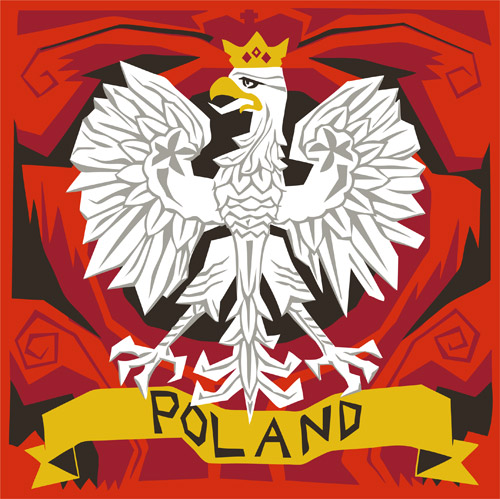
To me, the melting pot metaphor about America had always been true and part of my everyday life. America was a place where people from all over the world came together to start over. I am an American whose ethnicity is Polish, German, and Irish. Being American has always been my nationality, even though I consider myself to be ethnically Polish, German and Irish. Most people I have met do the same, introducing their ethnicities in a variety of ways regardless of how long their families have been in the country.

Identity, for anyone, is a tricky subject, especially since it is such a fluid concept. Our personal identities are constantly shifting and changing as we have experiences and reflect upon our past and present situations. Add to these complications that we don different identities around different people and it becomes impossible to nail down. Even my name differs depending on which group of people I am with. My college friends all know me as Matt, my High School and work friends all know me as Pisa.

To discuss identity, I suppose the best thing to do is break it down. A lot of a person’s identity comes from their interests. Looking at identity through this lens, I would have to say that my identity is my love of folk music, Wes Anderson movies, reading ‘good’ books, and so much more. To my overall life goal, my love of literature, reading, and writing would probably be the most important. It is because of this love that I am an English graduate student at Fredonia. I have no choice but to think of being a graduate student as a huge part of my identity, because during the semester there is little time for much else besides school (when you’re doing Grad school right, that is).


On top of that, literature affects my future identity as well. If everything goes the way I hope it will, I will be an English Professor (maybe even by the end of the decade. Fingers crossed). If I do become a professor, it will be as important to me as being a student is now. All of this stems from the fact that my father instilled a joy and appreciation of reading in me from a young age. I would refrain from saying that my identity is inextricably tied with reading and literature or even my desired career.

Music is just as important to me as literature. I don’t think that once a person has heard music that a life without it could ever be worth living. I am more scared of going deaf than blind because of this fact. You can still read books when you’re blind, but you can never hear music again if you go death. I can’t imagine what Beethoven went through. Despite this, I am not a musician, nor will I ever be based on the talent (or lack thereof) that I have exhibited on instruments.

Outside of interests, past experiences are also instrumental in forging a person’s identity. As the pool of past experiences grows until death, so does the shaping of an identity. During my formative teenage years, I had to deal with the death of my father. My dad died June 22nd, 2002, shortly after my sixteenth birthday. He went to work like usual, but had a heart attack while he was there.  His death was one of several that devastated my family. At the end of what was about a five year span, my cousin, father, grandma, uncle, and grandfather had all passed away. 

My relationship with my father, while not perfect, was, and is, still extremely important to me. He was my best friend and despite the fact we did not always see eye to eye on things, I hold the lessons he imparted on me with a special weight. After his death they became even more important to me because I feel I have to carry on his legacy and so that he doesn’t regret bringing me into this world. He taught me that generosity, hard work, open-mindedness, honesty, and loyalty are the characteristics of a decent human being. While I try to incorporate all these things into my being, it doesn’t always work out the way that I want it to. I often find myself wondering if I strive to be a good person because I actually want to be a good person, because of the lessons that he taught me or due to his death. I still cannot point to one of those things and say ‘that’s why I try’, maybe its all three. I’m not that great of a person anyway, so I suppose its not that important. Besides these issues, his death shaped me in other ways as well. 

Before his death, I hated cigarettes and tried to get him to quit everyday. When it turned out that they attributed to his death ( they cause atherosclerosis) I decided to start smoking to figure out why it was so hard for him to quit. After a little over six years I managed to quit smoking for the first time. Cigarettes had become part of who I was by that point (yet another fun part of identity: substances we indulge in). The first time I quit smoking, I lasted three years without smoking. Even throughout the last year of non-smoking, I still had dreams about smoking cigarettes. Eventually, I decided I didn’t really have a reason not to smoke cigarettes and started again. I quit again after another two or so years smoking. This time is worse than last time, but its lasted for about six months. I feel like I will forever be, technically, a smoker. When I smell burning tobacco I cannot help but wish I was the one smoking it. Were it not for my father’s death I probably would never have picked up a cigarette. Trying to live up to my idea of his expectations and coming to terms with his death have played a huge role in shaping me.

The third and possibly most crucial factor in my own identity is probably the fact that, as I said, my grandparents were immigrants. Like I stated previously, this has always made me feel more American. My grandparents move here from Poland have always made the melting pot that much more real to me. I’m positive that if they had gone to Australia like they wanted, I would be a much different person right now. Growing up hearing Polish spoken (even though I don’t understand it) was important to me. Hearing it spoken now still calls to mind childhood memories, even though for all I know the speaker is insulting me (maybe that was part of my childhood too; who knows?). Holiday’s with a mix of Polish, American, and German traditions were something I got to experience.
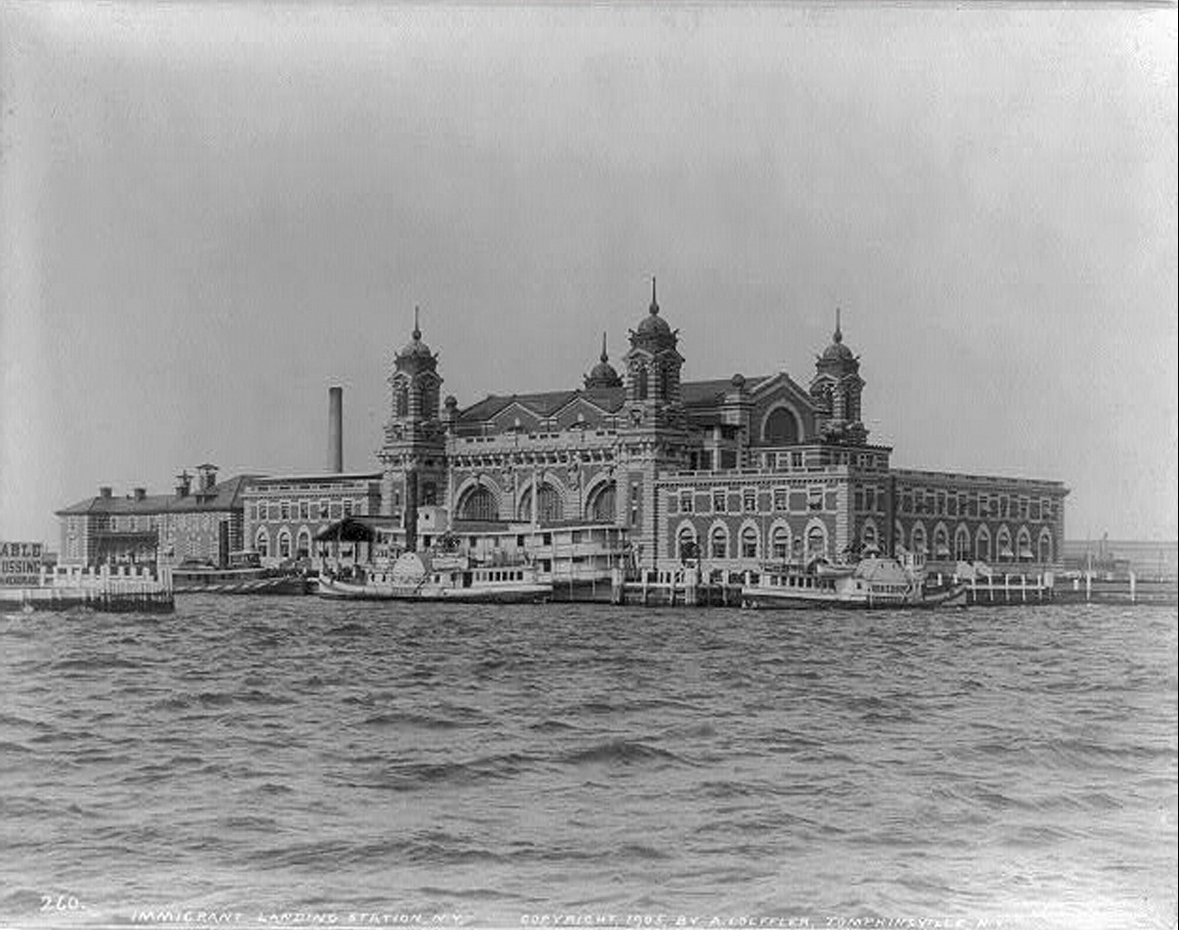
My mother’s parents came from families that had been established in America in the later half of the 19th century. The Ehmke family was rather successful in the small town they had settled in, my Great Grandfather owned his own lumber yard and constructed several of the buildings and houses in town. The Kissinger’s lived in Buffalo after the death of my other great-grandfather ( which was around the time my Grandma was two). Luckily, a blind date brought their two families together before my grandpa left to fight in World War II. My grandpa was always listening to records, cassettes, or CDs and its probably from him that I get my love of music. His last words to me, the day before he died, were “keep the family together”. Maybe he knew I was the designated mediator in fights between my brothers and mother (any formulation of the three of them fighting probably happened). 

Anyways, the eventual arrival of my grandparents in America, coupled with the established family of my other set of grandparents,  has always made me feel more connected to the American tradition than those whose entire families have been here for hundreds of years. I got to experience both sides of the tradition. This ‘multicultural’ upbringing allowed me to experience things that many children are not exposed to. Learning about immigration and how the country was founded by immigrants coupled with stories of bilingual homes made me feel connected to the foundation of America. My grandparents were more like the pilgrims than the grandparents of children whose families were colonists in my mind. I was an American, but I was also Polish, German, and Irish. For a long time I felt that this was my concrete identity.

The importance I had placed on ethnicity was challenged when I met a guy from Ireland. When I mentioned I was Polish, he wanted to know when I moved to America. After explaining I had been born here but my grandparents moved here in ‘52, he told me I wasn’t Polish, I was American. Before this point I thought I was, basically,  just as Polish as I was American. The irony of this, of course, is that it is only in America where we put this emphasis on ethnicity making it part of our ‘American Identity’. 

Based on this, my idea that having immigrant grandparents or parents is a very American thing has been reinforced. The importance that we, as a culture, place upon ethnicity and where ancestors came from shows that our population is one based almost entirely on immigration. Barring Native Americans, even the earliest ‘American’ families will be able to tell you what ethnicity they are and, most likely, the town or city their ancestors came from. Whether we track this for bragging rights of who has been here longer, or because we hold pride in our ancestor’s homeland, the fact that we keep track is enough to show the importance that we place upon where and when our families came here.

This gives us an interesting perspective about our collective idea of American identity. The United States has always, since being established as the United States, had an immigrant population. The pot is real, but people inside that pot don’t want to fully melt. Rather than becoming one, we choose to stay somewhat fragmented by hanging onto these connections to our heritage from outside the U.S. This is why, when asked about ourselves, we divulge the fact that one hundred and fifty years ago, our Lithuanian ancestor settled in Pennsylvania. Its why Dyngus day is a huge holiday in Buffalo and St. Patrick’s day parades are all over the place as a celebration of Irish Heritage in a country other than Ireland. 

The existence of these cultures coming together in America shapes the identity of Americans. Rather than tearing us apart and making us into factions as these issues once did, we celebrate that we have the best of everything. We have the best Irish whiskey, the best German food, awesome Thai restaurants and easy access to an Americanized chinese food. People who are not Irish get just as drunk as those who ‘are’ Irish. People who aren’t Polish are still welcome to grab squirt guns and pussy willows. These are not divisive traditions; they have become American celebrations that welcome anyone who wants to have fun and celebrate that all these cultures are housed under the umbrella of ‘American’. 


Part of being American is the fact that you are more than just your nationality; you have a unique heritage. There is also a solid chance that you traditions from some other ethnicity that your family is not part of, because it looked good to somebody observing it. Just as American is a smattering of people from all over the globe, traditions that make us American are a hodge podge of things that each of these people brought to America. Rather than keeping these traditions they became part of a collective culture, to be shared by everyone.

I think there are several ways through which we can think about both personal and American identity. The most interesting belief I have about American identity is there is not a single, uniform identity that applies to Americans. We all have varied backgrounds and views. Part of being American, to me, is that we are not forced to fit into a certain ideology or strict definition of what it means to be American. The only real requirement is being a citizen. It is not even necessary to live in America to be considered American.

To respond to the question on the assignment sheet of ‘Who ought “we” to be?’, I think we do not really have to be any specific thing to be within the realm of the American Identity. Variety seems to be the American Tradition. Our political system even demonstrates the varied nature of American culture. We have the two major parties, but we also have several smaller parties. There was even a ‘The Rent is Too Damn High” party.  

I feel like this is a good representation for my view of American Identities. Being American means different things to different people, which leads to the formation of all sorts of different identities and views on what it is to be American (even though they may not be at odds with each other like in the political system). There are the major ways in which we think about this, which is mostly Independence, Freedom and our forefathers who wrote the declaration. It has to do with history and tradition. The smaller parties, that might incorporate the larger ones, represent little things that we as Americans think in terms of what it means to be part of this country.

I think one commonality that unites views of American Identity throughout American History is the view of America as a force of good in the world.  From the Revolutionary War to World War II, we have stood up for principles that, at least the government, determine to be American Principles. These usually include fighting oppression, freedom, rights, etc.  Freedom and the rights we have as spelled out in the constitution seem to be common things that people in America value. Most of the wars we have fought have been said to be about these things. Although, throughout our history we have often limited the rights of groups of people (and still do today), America often strives to do better. While the government gets involved in wars that we are told are ‘for the greater good’ the citizens of America often protest when we disagree with their formulation of the ‘greater good’. While citizens do not always agree on these issues, they stand up for what they believe in nonetheless. Trying to do what is right is, at least in American Propaganda, what we have always strived to do. This seems to find its way into the ideological structure of most Americans.

Examples of this in history are the Vietnam War protests, the Civil Rights movement, the current activism for LGBT rights and gay marriage and the list goes on. These are things that people are willing to stand up and fight for. Fighting injustice is something that I think most American’s would rank among the top ‘American Values’ as evidenced by things like the commemoration of Dr. King’s ‘I have a Dream Speech’. Of course, there are still huge strides that have to be taken; progress has been made since the speech was given. Our celebration of that progress is evidence that we value equality and justice in America.

Part of my identity is the music I listen to, the books I read, and my hopes and dreams; the things that I'm interested in and interested in doing. Another part is the way that my family taught me that I should act; the beliefs and values that they instilled in me. The third is my identity and what I think it is to be American. Being American does not pigeonhole us into one particular way of being. On the contrary, we are able to adopt traditions and beliefs that might otherwise be unavailable to us if we lived elsewhere. We can think and believe what we wish. The open ended nature of the question of American identity allows everyone to formulate their own answer. I'm a fan of folk music, a book lover, and an American.

16 October 2013

On Being Greek, Jewish, and American

The student who wrote this wished to remain anonymous.

Section 1:  Identifying Myself

Starting off with the basics, I am a 19 year old female college student. As a typical college student, I have been involved with many clubs and organizations on campus including Sigma Kappa Sorority, club soccer, Orchesis Dance Company, and Student Association. On the weekends, I like to do what many college students do when the stress of the week is over and the freedom of the weekend comes over us, celebrate with some festive activities! I have a major in International Relations with a concentration in Peace and Conflict, and a double minor in Spanish and Political Science. I used to have a second major in exercise science, but by the words "used to" it's pretty clear how that worked out. I'm a sophomore, a Sigma Kappa 'til I die, a dance enthusiast, a gym rat and sports fanatic, a daughter, a sister, a girlfriend, a friend, quite possibly an unknown enemy, a Dean's List student, and most importantly the only one like me in the world.

I know I'm a sophomore in college with majors and minors declared, but as you can see with the exercise science major speed bump in the road, I still have no idea what I want to do in this world. With so much pressure from academic advisors and my parents to find what I want to spend the rest of my life doing, I can't help feeling that at the ripe old age of 19, it's okay not to have every answer. I do know, however, that I was put onto Earth for a reason and it is my goal to spend the rest of my life figuring out just what exactly that is. However, I do have some pretty interesting goals in my life. With the obvious first, change the world for the better in any way I can. With my International Relations major, I am hoping to go into diplomacy. Foreign affairs and international relations has always vastly interested me so I think it's pretty cool that I get to study it!

I am Greek. Yes, I am a member of the Greek system; however, I actually am really Greek. My grandparents were born in Chios, Greece, and I am a second generation American. Some people don't even know what their heritage is, let alone celebrate it, but being Greek is actually a pretty big part of my life. I have been to Greece, and my whole family is a pretty typical loud, big, lots-of-food, Greek family. We all speak some of the language and cherish the traditions we have.

I am a Jew. I went to a private Jewish school from nursery all the way to 11th grade, when I transferred to the public high school for various reasons.  I have been to Israel multiple times, and see it as a home. My mother's sister lives there with her husband and four children and multiple grandchildren. The majority of my friends from my private school studied in Israel for 1-2 years post high school, pre-college, as my sister did. I have an immense faith in my Judaism and it is without a doubt one of the most crucial aspects of my identity. I have been a victim of anti-Semitism, disregarding the common "Jew jokes" that seem to always find a way into most of my conversations with others. Being a Jew, in the eyes of some I somehow am personally responsible for the entire Middle East conflict that has begun way before I was even born, an incredibly cheap person, and shockingly have a normal sized nose. Despite all of the digs and minority stabs, I am a proud Jew.

I am an American. Born in the formerly known Harris Hospital, now named Catskill Regional Medical Center, I am a citizen of the United States. I hail from a small farm town in the Catskill Mountains, Bethel, NY, home of the 1969 Woodstock music festival. I'm an incredibly proud American knowing that just from being born on this soil, I have the rights set forth by the founding fathers of this democratic country. I have the right to life, liberty, and the pursuit of happiness, and of course the only two things promised in life: death and taxes.

Section 2:  A Significant Experience--9/11
   
On September 11th, 2001, there was a terrorist attack on the World Trade Center. Two planes were hijacked and flown directly into the Twin Towers. Many Americans simply hear the term "9/11" and know exactly to what it refers. To everyone, though, it brings them back to a different place. To some it may bring back the memory of a lost loved one taken away from them by the attack, or it may bring them back to being a little kid at the time and not knowing exactly what had happened or what it meant.

For me, it takes me back to being in the third grade and being called out by the principal, walking to the principal's office and seeing my older brother already there sitting next to two other boys who were brothers. I was confused as to why I was called into the office with this group and realized it was because both of our fathers worked in NYC, either on the same block as or in the World Trade Center. Thankfully, mine was the one who works on the same block. We were told our mothers were on their way to pick us up and that there was an attack in the area where our fathers were. Being in third grade, and the youngest of the students in the office, I had no idea what was going on. When my mom picked up my brother and I, she explained that she had not been able to reach our father yet. Not knowing what had happened to him for hours, finally he was able to contact my mother to tell her that he was okay. He was outside the doors of the World Trade Centers and physically watched the first plane crash into one of the towers. Hours later he was able to take a train into a town outside of NYC where we met him and brought him home safely.
   
This experience was extremely eye-opening to me. What triggered this experience into my connecting it to American identity was when we went to get my father, seeing all of the citizens, victims, firemen and others meeting here at this train station, the only way in and out to the site of the attack. The police officers and firemen who were going into the city risking their own lives to try to save someone else’s. I think that made it very clear that in this nation we are strong and when a national emergency like this happens, the citizens of this country really unite and come together to survive and make it through. We can even turn the site of this national attack into a monument, a place where people can come to grieve, realize, or even just understand what happened there and what it meant. People now make Ground Zero a must-see stop if they visit NYC, and I think it's great that we acknowledged it and can turn it into a place of memory, yes of something tragic, but still never forgotten.

Section 3: My Beliefs/Values/Principles & How We Should Define and Understand American Identities--Who Are We and Who Should We Be?
   
I am an American and believe in many of the values that were set forth by the founding fathers who developed and made this country into the great nation it is. The values that all men are created equal, all men have the right to life, liberty, and the pursuit of happiness. Not being discriminated or judged upon the color of your skin, the origin of your parents or grandparents, or your faith. Coming together as one people, one nation. And coming together as one being important as to how preserving individual freedom requires collective action. Our pledge to a declaration written when this country had just become a nation, and our preservation and interpretation of this declaration from the day it was written to today. The preservation of human dignity and justice. All of these things are the beliefs, the values, and the principles that were instilled in me and taught to me as an American, and are the same beliefs, values, and principles I hold dear to me as a human being as well.
   
Unfortunately, all of these things are not necessarily always the case. There are hate crimes in this world and discrimination from people that believe that because you are different from them, you are below them. There is injustice and hardships for many decent people who may not deserve all of the obstacles life has given them. But as Americans, what we should have is an equal opportunity to each and everyone one of us. That for each American, all of the beliefs, values, and principles we are governed by and taught and are our rights to have, should pertain to all of us.  Although this country has overcome many unjust things such as the days of African American slaves and the organizations of hate such as the Ku Klux Klan, there is still much adversity we face. In a perfect world, we would have all love and no hate, and equal opportunity for all, but unfortunately that would be a perfect world, and one that we do not by any means live in.

In class, we watched the video of Blanco reciting the inauguration poem “One Today,” and I believe that the text of this video is what our founding fathers of this country wanted and envisioned when they wrote the Declaration of Independence and the Bill of Rights. We are recited a poem at every presidential inauguration as a reminder of what this nation stands for, as a reminder of what this country believes, and as a reminder of what this nation is capable of.  A nation where there is complete and true freedom of religion and speech. A nation where somebody whose home life and upbringing can be significantly different from another’s, yet they still have the exact same opportunities. Where someone who grew up poor and in a violent neighborhood can turn his/her life around and get an education and succeed. This nation is great and has potential to become even greater, and I am very proud to say I am a citizen of it.

This class has opened my eyes to so many American Identities that I have never taken the time to think about or analyze before. There are so many aspects to identity and so many big and little things that shape someone into exactly who they are. Reading and analyzing books about different aspects and engaging in debates and discussions showed me that they pertain to all. Even just our class is an example, we all came to class the first day not knowing everyone and were shy to speak up and make our point but as the months went by, we all got much more comfortable with each other and were able to respectfully debate and even joke around with each other. I think that bringing young adults together like that with completely different backgrounds and opinions and throwing them into a complete discussion-based class is incredible. We all learned so much about each other, and I have learned so much more about American Identities than I had ever known and my eyes were opened to a much better understanding and appreciation of it.

19 December 2012

American Identities Web Projects, 2012

I'm going to start posting Identification Projects from my last two semesters of American Identities a little later this week, but here's the work of my students who chose the web authoring option for their Final Projects in spring and fall 2012!


20 December 2011

American Identity: From the Philippines to Fredonia

American Identity:  From the Philippines to Fredonia
Mikiharu Holst


Long flights are never fun and those flights around 20 hours long are especially bad. I was living in the Philippines before I came to Fredonia and my family had been travelling around the world for a long time. My father and siblings have American citizenship like me, but my mom is a Japanese citizen and has a green card to live in the States. Since we travel a lot on government orders for my father's work, she gets a somewhat free pass with issues of refreshing it and having to deal with some problems with moving in and out of the country. If the government didn’t give some leeway to families that had to travel, that would be terrible.

            Anyway, at the immigration counter in Detroit where they check your passports and what-not, the guy who was manning that desk was telling my mother she couldn’t go on. He said her card was expired and she couldn’t go on. My mother tried to explain that because of her husband’s orders… And he cut her off. He kept saying that it didn’t matter about him and his citizenship, because she wasn’t a citizen and needed to update her card. She knows how this works, I mean she’s been doing this for years, but the jerk wouldn’t listen and was just being rude. It was incredibly frustrating to say the least. We had a flight in about an hour and a half, which is not much time in airports, and this was a hassle we really didn’t need to deal with. Eventually he sent us over to another desk, I can’t remember what it was called, but they dealt with these problems more in-depth so the rest of the people could get through. The new guy understood what the problem was and knew that she didn’t have to jump through hoops to travel in the US. So luckily we managed to go on without much hassle after that. He talked a little bit about maybe refreshing it soon, but that it cost money that would be unnecessary to spend while she didn’t need to. We made our flight and now I’m here in Fredonia attending college. This experience made me really think about what it means to be American.


            Just looking at how the two different immigration workers in the airport treated my mother gave me a sharp contrast in how Americans can act. One was incredibly rude and dismissive of someone who wasn’t American. The other helped as best he could and offered advice on how to best deal with the situation we found ourselves in. Immigration is the first thing that people see when they enter a country and as I’m effectively new to the US, this was my first glimpse at America. It wasn’t a great introduction to American society, but the help of the other worker helped to make it better. In Beyond Citizenship, Peter Spiro talks about American citizenship and the devaluing of American citizenship. This probably applied in my situation with immigration as the first man obviously feels strongly about American citizenship and how my mother didn’t want to become an American citizen. This is because Japan only lets you have one citizenship; you can have dual citizenship if you're born with both, but you have to pick Japan or whichever other country you’re tied to before you turn 22. Her parents, my grandparents, are Japanese and live in Japan so she is not going to give up her citizenship when she can just get a green card to live in the States. Spiro says the value of American citizenship has gone down, and while it may have gone down a bit, I believe that being American is still valuable.


My name is Mikiharu Holst and I’m half American and half Japanese. I’ve lived in many places around the world and have in turn experienced a lot. I was born in the States but I’ve spent more time overseas than I have in the US. In total I’ve only lived in the US for four years. My time in Japan and Israel has been more memorable than the few years I’ve had in the states. Moving around so much has made it that I don’t, or can’t, say “back home” in reference to the States. “Back home” happens to be wherever my family happens to be at the moment. The location of “home” shifts every few years and that’s normal for me. As moving to a new country is a more drastic change than moving to a new house in the neighborhood or to the next state, I’d say that my life has been different than many Americans. This has also lead me to less American interaction overall, as living in other countries has limited it to people in similar circumstances to me. Japan is the place I’ve lived the longest and could possibly be called home, but I don’t think there is any country I can really dub “home.”


While I don’t have a home, I’ve developed as a person throughout my life. I can say what kind of person that I am. I’m a nice guy, not outgoing, attempt to be funny but often fail miserably (sometimes in a way that ends up being amusing), pretty lazy, and a bunch of other descriptors that I could spout. Figuring out what kind of person I am isn’t something that just clicked one day. I’ve learned and relearned what kind of person I am throughout the years. It’s a bit harder to define what I am in regards to national identity, even after my 19 years on this planet.


Race is often used to guess roughly where someone is from. You take that, compare it to their clothes and what they have and you start forming opinions. Even if it’s not conscious, we all stereotype in one way or another and we apply that to how we look at the person. This could lead to a guess to them being from Kenya, China, or England. It’s terribly inefficient though. People from all races can be found all over the world. The US is also pretty diverse so that can throw a wrench into some guesswork. Drawing a conclusion of nationality from race doesn’t work. Matthew Frye Jacobson has a part in Whiteness of a Different Color where he quotes Smith and his students. One student was saying how anyone could tell that he was Greek just by looking at him. The student he asked said she didn’t know that the other student was Greek before he told the class he was. If you stand in front of a stranger and study them for a minute, will you be able to see what nationality they are? No. I can’t look in a mirror and see what my nationality is and I can’t look at someone else and instantly know theirs. So while we are legally born with a nationality, that doesn’t really mean anything. People aren’t born patriotic to a nation. You don’t even know what a nation is yet. Identity has to be found.


            I could just look at my race and then turn to my passports and stop there. If someone asks me what my nationality is I can just whip out my passports. “Look at these and it’ll tell you what I am. Ignore any preconceptions and doubts you may have, reader of my passport; you can now see that I am American and Japanese.” But wait, this doesn’t always work for people. It doesn’t work for me. While I do identify as American and Japanese, it’s not because my passports tell me that. There are people who don’t feel like they’re a part of the country they are officially a part of. Other people feel like they have a certain nationality even when they don’t have it officially. Having that little book is very useful if you want to travel and various other things requiring identification. I get to visit my family after this semester ends because my passport will let me fly over and visit them for winter break. People couldn’t travel around the world and see new places and experience different things without passports, but they don’t make your identity.


            Still, passports can help you figure out your identity. Typically this would happen by letting you travel and the experience would help you out. I’ve travelled all over the world because of it and I’ve dealt with many kinds of people. Europe, the Middle East, Japan, and the Philippines all act differently. Being in these places gave me experience with the rest of the world and how it acts. Many things are different overseas and many things can end up similar. Obvious things like language matter little and a lot. People are people regardless of what language they speak, but not speaking the same language can cause barriers to appear. In the Philippines they speak English but Tagalog is mixed in liberally to make a unique blend of Tagalog and English. It can vary depending on who you speak to and where you are in how much languages are mixed or used. This fusion of two languages is vastly different than in the US where speaking multiple languages is promoted, and bashed, at the same time.


Language also influenced my views on my identity, albeit indirectly. I can only speak English, even though I learned Spanish as a young child and Japanese in school while I lived in Japan. I forgot basically all the Spanish I knew within a couple weeks of leaving Mexico. Japanese went away slower, but I’d also not learned it as well as I had Spanish as a young child. I probably forgot the bulk of my Japanese knowledge more slowly than I did Spanish because we use a small amount of Japanese around the house; we occasionally talked with our grandparents on the phone(who only speak Japanese) and watched anime. I know a few words and how to count but I can’t really communicate with anyone in Japanese beyond rudimentary statements. While I still love my Japanese side, my inability to understand and speak Japanese effectively locks me out of truly identifying as Japanese. I like to say I’m half Japanese and its definitely a part of me, but my American side is more prominent because of this.


Cultures of other nations can give a stark contrast, or eerie similarity, to the one you’re used to. While I didn’t really live in America long enough to really grasp American society, I’ve lived around Americans overseas and have been in American International Schools. I think one of my most interesting experiences with culture was my trip to Qatar. Qatar was only going to take a few days as I was only there for an MUN (Model United Nations) conference. I flew in from Israel, so we had to do a somewhat roundabout flight to avoid problems with that. Right away my trip to Qatar made me think about what being an American meant. Just flying from Israel is enough to make it so the flight has to be in a somewhat roundabout way that avoids nations that aren’t really on friendly terms with Israel. While not everyone loves America, we don’t have to deal with as many people outright hating our guts. Landing then leads to customs and immigrations where having an Israeli passport lead to more scrutiny. A couple people were pulled aside for a more thorough check, being hassled for things on their passport, although overall the treatment was less severe than the year before. This is the main part where I saw what being Israeli meant to other people and I compared it to my treatment then and now. After the airport, most of my experiences and comparisons that I draw from Qatar stems from comparing the culture there to American culture. In a way it was very similar, but again very different. Many women wore traditional garb yet fashion stores could be found in malls. The mall I went to is an incredible mall that is fancy. It had a canal that ran through much of the mall, complete with gondolas. It had an ice rink, IMAX 3D, and of course McDonalds. A mall as massive and filled as this is something that many people consider “American” with consumerism and burgers, also had strong Islamic ties. It was a unique experience to me and was very interesting to say the least. The US has, relative to some countries in the Middle East, pretty strong ties to Qatar so it might not be too much of a surprise to see “American” things, but the contrast was still fascinating.


            When I think of my identity in the sense of being American, I look at my life experiences and who I am to try and determine that. I’ve only lived in the US for four years in total and this freshman year in college will be my fifth. I’ve lived in Bolivia, Mexico, Japan, Israel, and the Philippines. I’ve also visited Qatar, Rome, Vienna, Paris, and other airports around the world. Seeing the world is a rare opportunity and I grew up with it. I’ve dealt with people in other nations having to deal with me, an American, which puts some more perspective onto my life. When I compare how the people are in most of these nations to how many Americans I’ve met and know, I start to think that I am pretty American. While it’s not a universal template, many Americans are pretty nice and go out of their way to help a stranger. At least, this is an aspect of Americans that I think I have. And that is how it ended up becoming for me. Travel forces perspective onto you as you see the rest of the world. Japan is a good place for this to happen. At least for me. The American environment through the housing and schools gave me a more grounded and familiar place to live. But I’d step outside and be in a whole new world and could see the differences right away. Home wasn’t a copy of American life, but it had many aspects and the bases were pretty similar. I could just look at the movie theaters and see differences between Japan and America. Simple things like movie seats being something you just picked in the American theaters while you were assigned them in Japanese ones. I could find food that is usually only readily available in America and was “rare” in Japan. Caprisun was surprisingly popular among my friends and I’d trade with them during lunches. The, in a way, easy access to America through the bases enabled me to stay grounded and explore the country easily.


            Sum up everything that’s happened to me during my life and all the things I’ve done and experienced and you build up my identity. I view myself as an American, with Japanese parts, a nice guy, atheist, person who’s seen much of the world, a gamer, and human. My life has seen a host of experiences in my travels, mistakes, and adventures. If I had to I might be able to narrow down how I exactly define what my identity is, but I feel like my identity is malleable and can easily get modified. Some of the basics stay the same, which would be the things I listed before this, but overall my identity is not something I can really define yet. But the things I listed at the start of this paragraph are some of the most important parts of my identity. Family influenced me but they’re not my identity. Being American is an important part of me as I love my country. My Japanese side as well is something that I appreciate a lot and enjoy. Experience and having been in a good amount of the world has a lot of sway for me. I’m human with all my mistakes and achievements. My gamer part isn’t just saying that playing games is an important part of who I am but it is also how I can describe the kind of things I like among other things. But simply being a nice guy is the most important thing to me. I can be a dick sometimes and am not always cheerful or nice, but I try. Being nice is something I want to be, so I try and be it.


             America is a great country and I believe it’s the best in the world, even with all of our faults and imperfections. We try to be the best, not just in raw power, but in how we act and view the world. Some politicians and citizens might not follow that same train of thought, but the country as a whole tries. Aspiring to be what America stands for is what I believe is a core feature of what being American really is. You have to really want to be and try to be American. That doesn’t mean you have to attend rallies or do other crazy things to prove it. Simply wanting and trying to follow some of the ideals of the American dream or the principles that we stand for is enough in my book. Taking it too far still makes you an American, just a bad or stupid person. The ideals that America stands for probably differ person to person, but I think some of my thoughts on it might ring true for others. Tolerance and acceptance towards others of all kinds is something that I think America stands for. There of course is still racism and hatred towards certain groups in the US, but it is not supported. As America was built to greatness by a large assortment of people and groups, none can claim to be the real American way. The best and brightest Americans have roots from all over the world.  So with that in mind, I like to think America is the melting pot, as its been called, and that we are open to all and accepting of others.


            Beyond simply accepting others for their differences and looking at who they are as a person, I think Americans’ acting when needed is another important attribute. America acts when we think we’re needed to help out. While we have had misguided acts and aren’t always doing things for the right reasons, we still act where others don’t. If there is a problem we go out and try and fix it. This is something that should apply to smaller things than the acting of the country as a whole. I would hope that I would be able to follow my own directions if it ever came up for me to try and help stop a robber or other criminal. It’s a terrifying notion, but if people can’t even go out of their way to help someone who is literally right there in front of them, then we have no right to call ourselves a true American. Americans have pulled together in times of crisis, but there are also people who loot in those times and ignore crimes in front of them. Putting aside the examples of those who don’t follow the law or turn a blind eye to those who do, it is still an ideal that I think many people would like to follow. It’s difficult to judge how people would work with it, but it something that I could hope that more Americans would try and do.


            In addition to stepping up when it’s called for and being open and accepting to others, I think to be American you have to also try and achieve the American Dream. It’s something that has been a part of America for a long time. It comes in different phrases and can be described differently, symbolizing many American values and something we can aspire to no matter our social class. It isn’t an absolute idea and it isn’t perfect, but it extols great ideals and can encourage people to rise high above what they normally would think possible. Dreaming for greatness isn’t what is required, but getting to happiness via hard work or through your own means. Promoting that you can achieve what you want in life and the freedom of each person to do so. Pushing for individual freedoms is something that America has been doing for a while and the American Dream promotes freedom to succeed.


            Being American is important to many and it is important to me. It doesn’t rule my life, but I’d like to hold onto it if I can. When I look at the rest of my life and look it over it helps me reaffirm my American side, while I still embrace my Japanese side. I’ve gone from seeing American-like things overseas to being in America again. Returning to the States for college and reading non-fictional and fictional stories on what being an American means to people and what it means to be American, I’ve supplemented my experiences with these points of views and ideas. While I think that overall my ideas of what it means to be American hasn’t really changed too much over the course of the semester in American Identities, I’ve gotten more perspectives and could develop it some more. Being American is an important part of my identity, but to really reach that point I had to experience other things to figure out what being American means.

Questioning American Identity

Questioning American Identity
Anonymous


When I am asked to consider who I am and my personal identity many things pop in my head. But to be completely honest I’m still finding myself. I think twenty-one is a reasonable age to be learning and discovering who I am and who I will be.  There are many factors that play into any one person’s identity. The factors that have affected and shaped my identity thus far would have to be my upbringing and family life, as well as my interests and even somewhat where my family has come from.  Obviously there are many more factors that play into an identity such as religious beliefs, political views, and privileges you may or may not have had throughout your life.


            I grew up being the oldest of three children in a middle-class working family. My parents are still married, and getting to the end of raising their children. I am the oldest; however, I am also the only girl. Being the oldest meant I always got the harshest punishments, strictest rules, and was simply expected to do everything well, yet was never really rewarded for it. Now that my brothers are in high school, I see my parents easing up, and the rules are much less strict, though my brothers would beg to differ. However, being the only girl had its advantages, so for most things I was “deprived” of, being oldest, I gained in being the only daughter.

             My rules were something like this: if you get any grades less than an eighty-five you got a stern talking to, if they were any less than eighty I was grounded. Being grounded for me meant no T.V. or computer time, no going out with friends, no friends could come over, and as I got older it meant the cell phone was taken away for a month, I was not allowed to see or call boyfriends, and it seemed like a new punishment was added each time.  Now seeing my brothers put up a fight against my parents baffles me; their punishment consists of maybe a few days of being grounded which adds up to no PlayStation, or going out with friends, the end. My one brother is not a strong student, so as long as he gets a seventy-five or above it’s a good job, kid, maybe next time you can get an eighty.

             Other things that my parents did that played into how I am now were my dad’s interrogation questions. By that I mean if I had any desire to go somewhere or do something I got, in rapid fire, Where are you going? What time are you going? Who is going to be there? When are you going to be home? How are you getting home? What are you going to be doing there? Are parents going to be home there? Are you sure you don’t just want your friends to come here? And then finally if I were lucky he would surrender his tight grip and say “fine, be safe, don’t do stupid things, and be home on time.”

             While my dad was the interrogator who scared off boyfriends, and even girlfriends who he questioned, my mother was the one who forced us to be involved. Her rule was you must be involved in at least one sport, and when your sports season is over you have to pick up another or join clubs at school. Now she did not go as far as the Tiger Mother, Amy Chua, who wrote Battle Hymn of the Tiger Mother and who chose her children’s activities for them, but she strictly enforced this rule for quite a while.  For me this was never a big deal because oddly enough I am the most competitive out of my brothers and I, so I was always interested in sports, and I loved being a part of teams.  I swam for the varsity swim team from seventh grade all the way through senior year of high school when I was the captain of the team. It was something I loved, something I was at least semi-good at, and I loved the competition. When I wasn’t on swim team, I was either practicing with the boy’s swim team for the hell of it, in a leadership club, or running meetings for art club.


I have always been in love with art even when I was younger. I was the kid who loved coloring and crafts, then I was one of very few kids in middle and high school who loved and took art class seriously, I never got bored when we went on field trips to the Albright-Knox Art Gallery in Buffalo, then I took AP Art in high school, and here I am, a Visual Arts and New Media major at SUNY Fredonia.  So in a way I’ve always kept art and creativity close to me, and hopefully that pays off when I graduate in the spring this year. Although I make my parents sound somewhat like hard-asses, they are not in all respects. Yes, they were tough on me, and while I hated that growing up, I’m starting to realize that it only helped me grow up, realize what was important, and it made me a tougher, stronger person in the end. But my parents have always been encouraging and strong believers in the notion of doing whatever is going to make us happy, of course within reason. While I know many parents would be extremely disappointed in their child going to school for Visual Arts, or as some of my friends tease me, being a “coloring major,” my parents have always supported me, my dad even helps me since he has an artistic eye, my mom does not always understand some of the art, but she too encourages, and she is very crafty so she is a help and inspiration as well. Not only did they get stuck with a daughter going to school to be a “coloring major,” now my brother is considering going to school for auto mechanics, as well--another field looked down upon by many hard-ass parents.  I suppose that’s why they had three kids; maybe my youngest brother will do something over-the-top impressive with his future.  But with that, all I’m saying is I have never felt low, or like what I’m doing is a disappointment or not good enough because my parents have always supported it; if I have felt low about my major in college it’s because of my school, and recent events taking place on campus which is a whole other story. So, as a senior in college I think most of what makes up my identity is my upbringing, my parents and family, as well as my interests and what I am pursuing in my life right now. 


However, it's not just my parents who been strong supporter of me; my whole family has. I have a very large family, and most people would think it to be strange how close I am to such extended members of my family. I still see my grandparents and a lot of my aunts, uncles and cousins every month. They all get excited when I bring new art pieces home that I’ve done, so overall I have a lot of fans. I love having a big, close-knit family because there is never a dull moment; it can be crazy, but I think having that has taught me to deal with chaos. The only downfall of being so close to your whole huge family is you have more to lose. And some of the losses my family have gone through recently have also changed who I am.  Now in some ways we like to compare ourselves to that crazy family in the movie My Big Fat Greek Wedding because there’s a ton of us, we can be loud and quite chaotic, and there is always hands down an argument somewhere because my family is extremely stubborn. But instead our movie would be called My Big Fat German Wedding, or My Big Fat Czechoslovakian Wedding.  While most people my age do not really identify with their family’s nationality, I do somewhat.  Like Jacobson talks about in his book Whiteness of a Different Color: European Immigrants and the Alchemy of Race almost all of us are not true Americans, meaning most of our families immigrated to American a handful of generations ago, from various parts of the world.

On my mother’s side of the family we are predominantly German, making me more than a quarter German. On my father's side we are primarily Czechoslovakian. When I was younger we had to do several family trees, and family heritage projects, and I always found it awesome that I was Czechoslovakian for several reasons. One, it was a tricky word that most kids couldn’t say at the time and sure as hell couldn’t spell. Two, I could say it and spell it because my parents taught me. Three, I did not come across any other kids in any of those classes who were also Czechoslovakian.  So when it comes to that side of the family I suppose it is not so much that I identify with being Czechoslovakian since I do not know a whole lot about the culture or history other than the whole dispute where it was broken into The Czech Republic and Slovakia, but it's more something I thought was interesting about me. Now my mom’s side of the family is extremely German, and my grandpa is one hundred percent German and proud of it. He is someone who is proud to be American, mainly because he worked for Chevy, so he forces us to only buy American-made cars and all that, but you could also say that my grandfather is the stereotypical German man. He is as stubborn as they come, he is always right, and will argue and yell until that becomes known. He flies his German flag next to his American one. Now some of my family say this next trait is because he is German and others just say it's him being an old man, but he is a complete pack rat; he keeps everything. Last year I found this skateboard in the garage that was his when he was a little kid.  Now despite all the grief we give him he is also quite a good cook--of course of your German staples such as bratwurst. And if you didn’t think it could get more cliché he constantly buys this German beer, that I do admit is quite good, but also like triple the alcohol content of a normal beer. So overall I think I am a bit more in touch with my German side, because it is brought to my attention, and I am surrounded by it frequently.  So far, this is how I view my own identity, but I’m sure with age and experience I will discover more about who I am and where I am supposed to go in life.


            As any American citizen would know our government is capable of providing us with many privileges as well as it having many flaws. Many of which directly affect us, the people. Personally, one of my biggest problems with our government that has and is going to further affect me negatively is our health care system. Currently this is one thing that has been a large topic of debate but one of the most difficult things to change.  Currently our health care is left in the hands of those who decide who is accepted and denied to be covered with health insurance.  These individuals are cut-throat, and do not give a damn about us as the people.  If you have a preexisting condition, forget it you won’t be covered as an individual; if you withhold, or forget even the tiniest bit of information such as a small case of bronchitis on their interrogation-style paperwork, they will come up with an excuse to not cover you. These companies are professional excuse makers so that they do not have to spend money on you. On my seventeenth birthday I had to do a three-day sleep study. I was tested and diagnosed with epilepsy. At the time medication cost and health care coverage had not crossed my mind a whole lot seeing as I was covered under my parents still.  About a week later my dad opened my hospital bill, which was completely outrageous and sky-high. This puzzled me because both my parents work two or more jobs, and they both work within the medical field. I did not quite understand the justification to why my father, a family nurse practitioner, and my mother a surgical technician, could be stuck with such god-awful health insurance.


 I investigated some more about healthcare in the United States, and learned a lot about it in my high school government class, and the end result was my complete disgust and fear.  Why is it that if I had been born an hour north in Canada I would be covered for free no matter my illness?  Or in other countries such as China or Japan, they pay small copays but the government acts as a cushion for the rest of the money. Or other solutions such as being a doctor is not an all-mighty profession like it is here; in Britain the doctors do not get paid nearly as well, but due to their lower pay rates, and some help from government funding they are able to treat their patients without making them go bankrupt.  I have experience with a family friend who has bone and skin cancer. He has been in and out of hospitals fighting pneumonia in addition to his cancers; when he is well enough to leave the hospital he gets put in aftercare facilities. Recently, his health insurance said he is only covered at his aftercare place for a total of three more days. The hospital told him he was not sick enough to stay at the hospital for any longer, and he had no more time left covered at the aftercare place. He was stuck with no place to go.  His family couldn’t afford to keep him in an aftercare place so now they rotate taking care of him the best they can, which is completely altering their lives because they all have jobs, families, school and lives. Is this what we should really be reduced down to? Is this really how the land of opportunity treats you? Lucky for me Obama recently passed a new law saying that kids can be covered under their parents' health insurance up to age twenty-six. It was previously age twenty-three, which would mean that as I am getting out of school, if I did not find a job that could cover me with health insurance, I would be paying insane amounts of money to keep myself healthy and safe. No college graduate has extra money to shell out.  If that were to happen I would be paying a couple hundred dollars for my medication every month, this is a medication I cannot skip out on if I do not want to risk my health and safety. 


Another thing that crossed my mind is that in the future I had considered the option of opening my own company for design, and if I were to do that I would not be covered by an employer, so that is another situation where I could be left hanging. In the news there were stories about the Buffalo Public School system, and how the teachers have extremely good health coverage, meaning their coverage is so good that they can get breast implants and that would be covered in their insurance.  How is this justifiable by anyone? How can one person get an essentially free boob job while other people are out there dying because they cannot afford the cost of medication or treatment--they apparently cannot afford the cost of life? My question is, who has the right to decide this person can get some health insurance, and this person can’t, which, when boiled down is this person lives and this person dies? These companies are out for money and money only, whether it means costing people their lives or not. 

Another thing related to this that is on the rise is new drugs. While on one hand it is great that with new technology are able to come up with all these new drugs to help with various health problems, it is having an extremely negative impact on our society. Firstly, these drugs are not cures, they are merely temporary aids. Secondly, most of these new drugs have more side effects than it’s worth. (For example, I still question it, my epilepsy medication has a side effect of twitching…. Explain that one to me, I twitch, which ends up being diagnosed as epilepsy, they give me medication for it and it is one of the side effects. The only reason I do not question it is because for now it works, and if I do not take it then there would be some serious issues.) Finally, because so many new drugs are coming out, they are all advertised in every way possible, being we live in a technology-based society now. And because all these advertisements are directed towards us the people, we automatically think, Oh, maybe that’s what is wrong with me, and then these people go tell their doctors I need to be put on this medication. I thought it was the doctor’s job to be diagnosing the patient? Not the patient coming in saying I need this drug. Not only is it the patients, though, because there are pharmaceutical representatives they come into doctor’s offices to promote all these new drugs, and the office agrees to promote certain drugs, which somewhat influences the doctor to prescribe those prescriptions. This is set up all wrong.  What happened to patients seeing doctors, and if something was seriously wrong the doctor would prescribe what he or she thought would best help that individual patient? I also think that in this world of drug reps and advertising, they are forgetting that yes we are all people, but all people are different, especially when it comes to the body and health.  Everyone reacts to different drugs differently, and every person has different conditions or problems that can change how things work.


 I think that a lot of the negative things going on in health care are dominantly because of the insurance companies, but also the rise of technology and advertising.  As a graphic design major I should not be saying this or thinking this way but in the sense of medication, it needs to be publicized to healthcare providers not the general population, because as a whole many of us are hypochondriacs.  Also with new technology advancements we are making all of these drug advancements, which could be looked at as positive or negative. But what I really question is if we have all these drug breakthroughs and all these technology advancements are aiding us at getting further in medical technology why have we not gotten around to actual cures for diseases or cancers? Or is it that we have and our government or drug companies are keeping it from us, because they as a whole will be falling if people do not need to keep coming back for their short-term relief drugs?


            I do not think I am the best source to discuss and analyze what the American Identity is. Honestly, I am not someone who always keeps up with current events in the news, or keeps up and fully understands politics and how our government works. I have some opinions here and there but am not completely sure of the true American identity. Based on my further knowledge from this course I have learned a few things, one of them being there is no one good way to identify the United States and its people. Like Jacobson talks about in his book, Whiteness of a Different Color, almost all of us today are not truly “American” or truly “white” because our families immigrated from all over the world, especially Europe. And even today you can go to different cities and notice the higher populations of certain ethnicities, because many Irish people immigrated and lived in the same place, and so did the Germans and Italians.  For example, I am from around Buffalo, and it is widely known that there are tons of Polish people around here. In Buffalo many Polish holidays are celebrated such as Dyngus Day where we even have a parade. Just like Saint Patrick’s Day is widely celebrated throughout the United States, because there were so many Irish immigrants.  So America is a mix of a whole mess of different people, which is unlike really anywhere else in the world. 

             However, when you get on the topic of immigration you have to consider all the controversy of the Mexican border and those immigrants still trying to come here. We are trying to do so much to keep Mexican immigrants out of our country because they are living here illegally and taking jobs that American’s could be filling.  So the question is, do we loosen our grip on the border because they are immigrants much like all the European immigrants, and this is supposed to be a melting pot and the land of opportunity, but can our country afford to keep letting them be here? I think other factors that play into our identity is our freedom, our education that we can provide for children, and the fact that we are a society that now revolves around technology. But we are human--are we able to keep up with the rate that technology is advancing? So far it seems America is doing a relatively good job at keeping up with technology but will we fall behind, just like we are falling behind as a world superpower? I also question things like, now that India and China are creeping up behind us, and most likely going to surpass us will that change our identity? Will our country and citizenship become less desirable? Or do we think that because our country is built on a foundation of competitiveness we will fight to stay on top? These are things that this class, American Identities has made me consider about our country, how others view it, and what our identity is.


Works Cited


Chua, Amy. Battle Hymn of the Tiger Mother. New York: Penguin, 2011. Print.


Jacobson, Matthew Frye. Whiteness of a Different Color: European Immigrants and the Alchemy of Race. Cambridge, MA: Harvard UP, 1998. Print.